Independent finished-product clinical results
SeneCell™: moisture now, hydration still there two days later.
By SeneGence · Updated
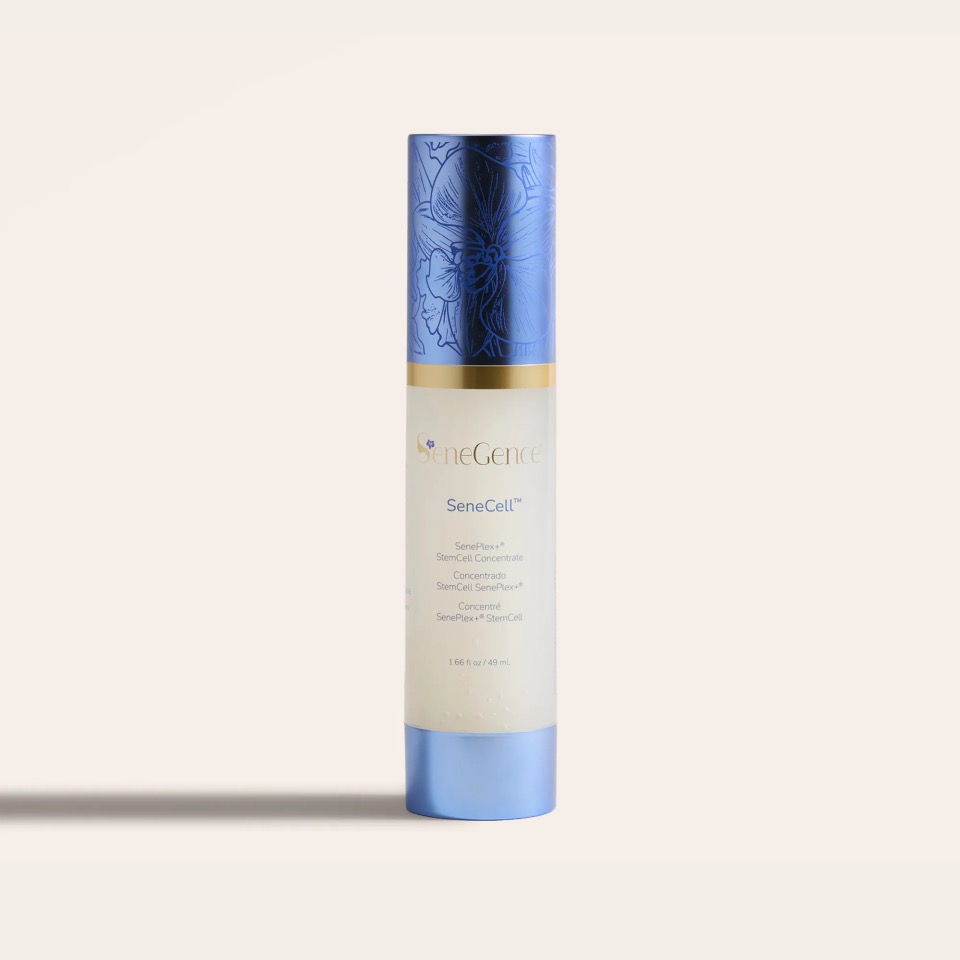
SeneCell™ SenePlex+® StemCell Concentrate increased measured skin hydration by a mean 73.9% immediately after application and 32.5% at 48 hours. With continued use, mean hydration was 56.4% above baseline at eight weeks.
What the study measured
- Tested product
- SeneCell™ SenePlex+® StemCell Concentrate
- Independent laboratory
- Essex Testing Clinic
- Participants
- 31 women, ages 38–75; all completed the study.
- Method and timing
- A trained technician measured facial skin hydration using a Corneometer at baseline, immediately after application, 24 and 48 hours after application, and after four and eight weeks of product use. Higher scores indicate greater hydration.
Every measured timepoint showed a statistically significant mean improvement in hydration. All 31 participants improved immediately and at eight weeks; no irritation was observed during the study.
Study design and limits
How this study was built, and what that means for reading its numbers.
- All 31 women, ages 38 to 75, used SeneCell, and each reading is compared with that woman’s own baseline. The topline includes no untreated or placebo comparison group.
- A trained technician measured facial hydration with a Corneometer before use, immediately after application, at 24 and 48 hours, and after four and eight weeks.
- The one-page laboratory topline is marked as preliminarily reviewed by Quality Assurance, and slight data changes may follow final review.
The complete measured results

| Timepoint | Mean score ± SD | Mean change from baseline | Participants improving | p-value vs. baseline |
|---|---|---|---|---|
| Baseline | 28.0 ± 5.4 | — | — | — |
| Immediately after application | 48.7 ± 6.6 | 73.9% | 100% | <0.001 |
| 24 hours after application | 39.9 ± 8.8 | 42.5% | 81% | <0.001 |
| 48 hours after application | 37.1 ± 6.8 | 32.5% | 81% | <0.001 |
| 4 weeks | 34.2 ± 6.9 | 22.1% | 74% | <0.001 |
| 8 weeks | 43.8 ± 5.9 | 56.4% | 100% | <0.001 |
Mean change describes the average measured hydration increase compared with baseline. Participants improving is the share of the study group with any measured improvement; 100% of participants improving is distinct from a 100% mean hydration increase. SD means standard deviation. All five post-baseline mean comparisons were statistically significant at p<0.001.
Study context and original source
These measurements describe the tested finished SeneCell product, from first application through eight weeks of product use.
The Essex Testing Clinic one-page preliminary laboratory topline is reproduced in the original PDF (page 2). It is marked as preliminarily reviewed by Quality Assurance; slight data changes may follow final QA review. The tables above retain every reported timepoint, mean, standard deviation, participant response rate, and p-value.