Product Demonstration & Consultation
How to Answer LipSense Price and Wear Questions
Answer LipSense price, wear, comparison, and hesitation with a direct truth, one useful reframe, and a next step the client controls.
“It's expensive” — build the value honestly
LipSense value becomes personal when you calculate cost per wear from what the client actually paid and used.
Put her receipt and wear record on the table between you. Work out the number together; she decides what that routine was worth.
how to use it
Ask the client for the actual paid price and record completed applications at their real amount and frequency. Divide price by observed wears only after enough use exists to make the estimate meaningful. Present the result as that client's personal cost per wear, then ask whether the Color-plus-Gloss system solves the routine friction they named.
the science
Use transparent personal arithmetic:
- PURCHASE PRICE
- actual amount paid
- OBSERVED WEARS
- completed applications at the client's real amount and frequency
- PERSONAL COST PER WEAR
- purchase price divided by observed wears
Cost per wear is a ratio tied to individual consumption. As observed applications accumulate, the estimate reflects the client's amount, frequency, technique, and Gloss-refresh pattern without assuming a tube lifetime.
“Does it really last?” — explain up to 18 hours
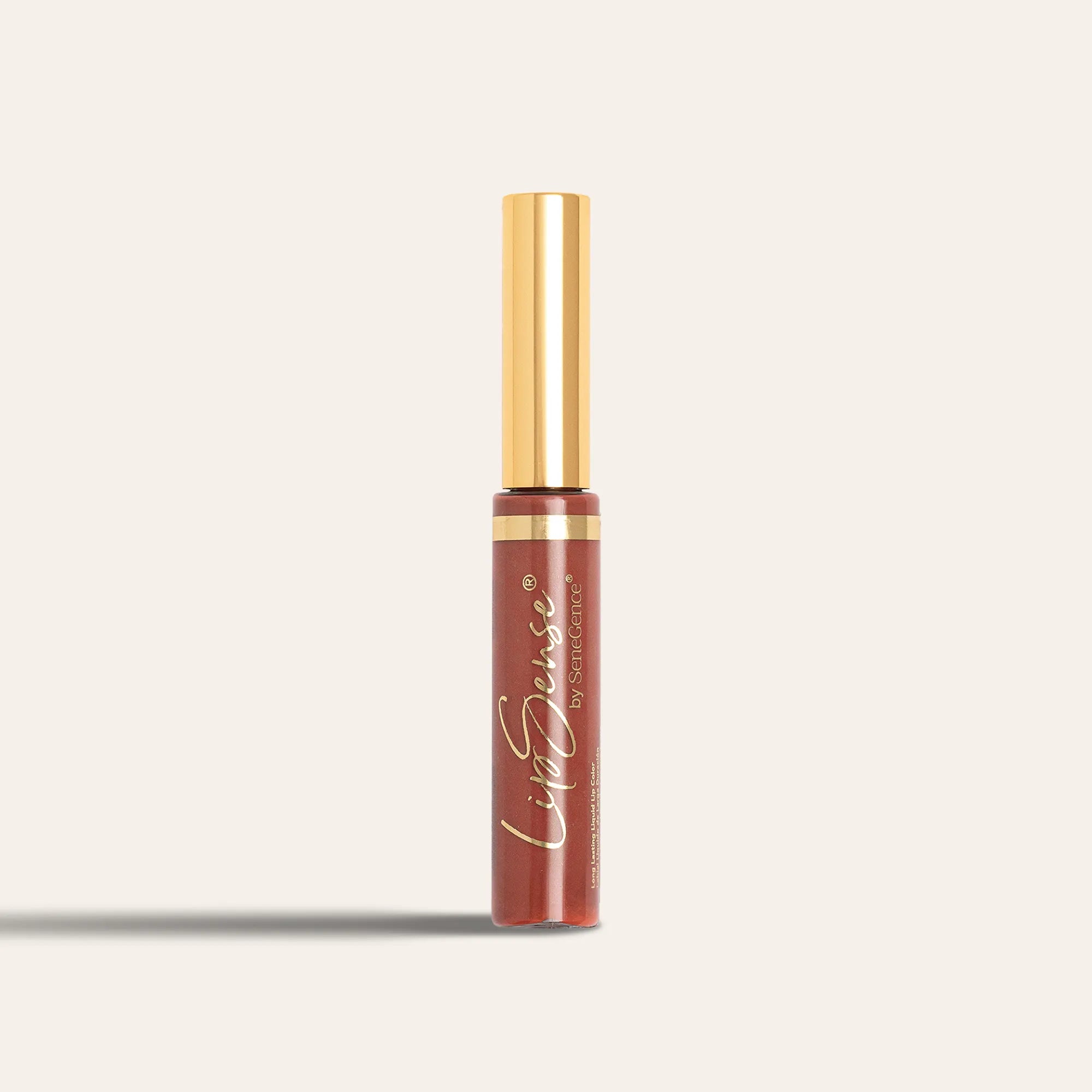
LipSense offers up to 18 hours of waterproof, kiss-proof, transfer-resistant wear; food, oils, and friction affect real-life wear.
That is the kind of day the promise is built for: coffee before the commute, lunch across a table, and evening plans still ahead.
how to use it
For a client-facing wear answer, use the current published wording once, then troubleshoot the controllable variables: lip condition, clean dry prep, thin even layers, full set time, oils, food, drink, and friction. Demonstrate the method and invite the client to assess wear in her own day. How Does LipSense Work? has the full system. The published range and conditions are at LipSense wear.
the science
The up-to-eighteen-hour statement belongs to LipSense Long-Lasting Liquid Lip Color. Its Permeable Polymer Matrix creates the flexible color film, and compatible LipSense Moisturizing Gloss supplies the conditioning finish. Film uniformity sets the starting condition; oil exposure, eating, drinking, and mechanical contact change wear afterward.
“I found a cheaper lip color” — compare the job
Compare the whole LipSense job: layered color, refreshable Gloss, and dedicated removal, not one sticker price.
Let her named priority set the comparison. Put both choices against what matters most in her routine, then recommend the one that serves it best.
how to use it
An MUA or esthetician should ask what the alternative must solve: touchups, shade flexibility, finish comfort, kit complexity, or removal. Compare both choices across the same client priorities and include every companion product in the price. Recommend LipSense when its Color, Gloss, and remover system answers the frictions the client actually named.
the science
A fair comparison holds decision categories constant: acquisition cost, use pattern, touchups, finish control, companion products, removal, and shade utility. The conclusion should follow the client's weighting of those variables. System features create value only when they solve a relevant use condition; unrelated advantages do not make an option a better match.
“Let me think about it” — leave the door open
Say it without turning hesitation into a contest: “Of course. Take the time you need. If you want to return to this LipSense look, I’ll make it easy to pick up where we left off.”
Keep the look easy to revisit: write down the exact recommendation and agree on one way she would like to reconnect.
how to use it
Before the client leaves, write down the exact LipSense look she liked, read it back to confirm it, and ask whether she would rather reconnect by message or on a date she chooses. Record the look with Guide the LipSense shade consultation, then use the permission-based close in How to demo LipSense.
Answer LipSense Objections With One Fact, One Value, and One Next Step
Answer the LipSense concern with one useful fact, one relevant value, and one next step the client controls.
When a client says, “It’s expensive,” personal cost per wear makes the answer hers: use her actual purchase and observed applications, with the routine value she cares about in view. Give her space to decide whether that value fits her day. Then wait for her answer.
Once layer three sets, sweep on LipSense Moisturizing Gloss to seal the color and give it a hydrating finish. Refresh Gloss through the day for comfort and shine. When the day ends or a touch-up needs cleaning, use LipSense Ooops! Lip Color Remover.
how to use it
Use the same chairside sequence:
An MUA or esthetician should stop once the decision is clear. Extra claims complicate troubleshooting and erode trust.
the science
The response structure stays fixed while the inputs change by question. Price uses personal-use arithmetic; wear uses the stated interval plus conditions; comparison uses matched decision categories; hesitation uses a recoverable recommendation. One relevant input and one clear next step keep the answer useful.