Professional Presence & Client Experience
SeneGence Social Media Post Ideas
Your Online Presence gets easier when each SeneGence post is organized around a customer decision: teach a technique, reveal a texture, compare shades, announce something useful, invite a conversation, or share a real customer experience.
Choose the Customer Decision That Organizes Each SeneGence Post
A post feels crowded when its parts pull toward different decisions. Give it a center: the question or desire the woman scrolling should understand by the end.
Teach, reveal, compare, announce, invite, or share a customer's own experience. A technique demonstration can teach and still name the exact product, proof, and routine step that make the lesson complete. A shade comparison can answer fit and invite a reply.
Choose the decision first, then let every useful detail earn its place. Product identity, necessary context, qualifications, and disclosure stay even when they are not the headline.
how to use it
Keep a running menu so you are not inventing at eight at night: educational, how-to, product highlight, announcement, customer feature, behind the scenes. Match the governing decision to the client's need and the strongest asset you have. Add product, formula, companion, evidence, and action when they complete that decision; leave out only what does not. A LipSense technique demonstration may invite a save, while a shade comparison may invite a reply, but the action should fit the post rather than satisfy a quota.
the science
Each customer decision suggests useful observations, and reading the wrong signal teaches you the wrong lesson. A tutorial may earn saves and completions; a comparison may earn replies and shade questions; an announcement may earn link taps; an invitation may earn booked consults or qualified messages; a customer feature may earn profile visits. Record format, product, audience window, intended action, and date beside the result. What you hold is an observation about that post, not proof that the format caused it.
Build a Beauty Post Around the Payoff and the Proof It Needs
Start with the payoff, then give the detail that lets her use it or believe it.
For LipSense, three layers sounds like a lot until you see how thin they are opens the question. Bare lips, three thin passes of LipSense Long-Lasting Liquid Lip Color, and Moisturizing Gloss after the color sets make the application visible. Save this for the next time you are doing your own is useful when the post is meant to be followed later; a shade question or purchase path may fit another post better.
Stop when the customer's decision is complete, not when a template runs out. Keep the product identity, necessary formula context, claim qualification, and relationship disclosure even when the caption needs more room.
how to use it
Draft from the customer decision. Open with the answer or payoff, add the useful product detail and exact reason or proof it needs, then choose an action that fits. Those elements can change order and depth; they are tools, not fields to fill. Compare performance only across posts with genuinely comparable intent, audience, and action. For wording the reason so it holds, use The Golden Rule of Claims.
the science
Measurement needs a clearly declared intended action, but that does not force the caption to serve only one function. A tutorial can answer a technique question, preserve a qualification, and offer a purchase path while saves remain the observation chosen for that test. Hold the relevant conditions steady, vary the element you mean to learn from, and repeat before you believe a pattern. Reach, starts and completions, saves, replies, profile visits, link taps, and messages remain observations about one audience on one day.
Adapt the Idea to the Surface: Carousel, Story, Short Video, or Post
Your source truth does not change. The shape it arrives in does.
A carousel wants a readable sequence, with every slide earning its place. A Story wants immediate context. A Reel, TikTok, or Short wants the point spoken and shown early, because the sound may be off and the thumb is already moving. A Facebook post wants a real paragraph and room for the conversation underneath it.
What stays true: the product named the way SeneGence names it, on-screen text a person can actually read, alt text that describes the actual image, and the answer arriving early instead of being withheld.
Hashtags are the smallest lever on that list. Use the words a client would type, then put the answer where she can find it quickly.
how to use it
Start from the same customer truth, then rewrite it for the venue. A carousel can unfold the sequence; a Story can give immediate context; short video can carry the point in speech, image, and readable text; Facebook can give the thought room. Keep product identity, claim meaning, and relationship disclosure truthful across them. Write alt text for the media actually published instead of copying it across different exports.
the science
Topic words, official product names, readable on-screen text, accurate alt text and original information are what stay retrievable when a platform changes its feed. Short video has to carry the core idea in speech and image at once, because sound state, hearing and viewing context all vary. Text-led posts benefit from putting the answer first, since a reader scans before she commits attention. A hashtag is one signal among those, and the weakest one to build on.
Share Customer Stories With Permission, Product, Context, and Individual Fit
Her story does what your own photographs cannot: someone who is not you, saying it happened.
So publish it as hers. Publish her words exactly as she gave them. The exact SeneGence product or service she used. Enough context that the next woman can work out whether any of it applies to her — how long, what else she was using, where she started.
Ask first, and ask for the specific thing: this photo, this quote, this place you want to put it. Permission covers the specific use you asked for; the relationship grants nothing beyond it. Keep that agreement specific.
Then close with a question instead of a claim. What she loved most is a better invitation than what everyone should expect.
how to use it
Ask for the exact photo, the exact quote, and the channel you mean to use. Record her credit preference, keep her service context attached, keep her wording, and close with a relevant question when it helps the next customer assess fit. How to ask is in engaging when someone shares her experience; Say This, Not That covers the wording and Photos That Sell Without Overpromising the image.
the science
Quote, crop, overlay, caption, product tag and pinned comment all shape whether a viewer reads the story as personal or as typical. Keep her context visible so it reads as personal, which happens to be the version that persuades: a specific woman with a specific problem is more convincing than an unnamed average. What a story may and may not be made to imply is written out in The Golden Rule of Claims.
Make the Customer Payoff the Center of the Post
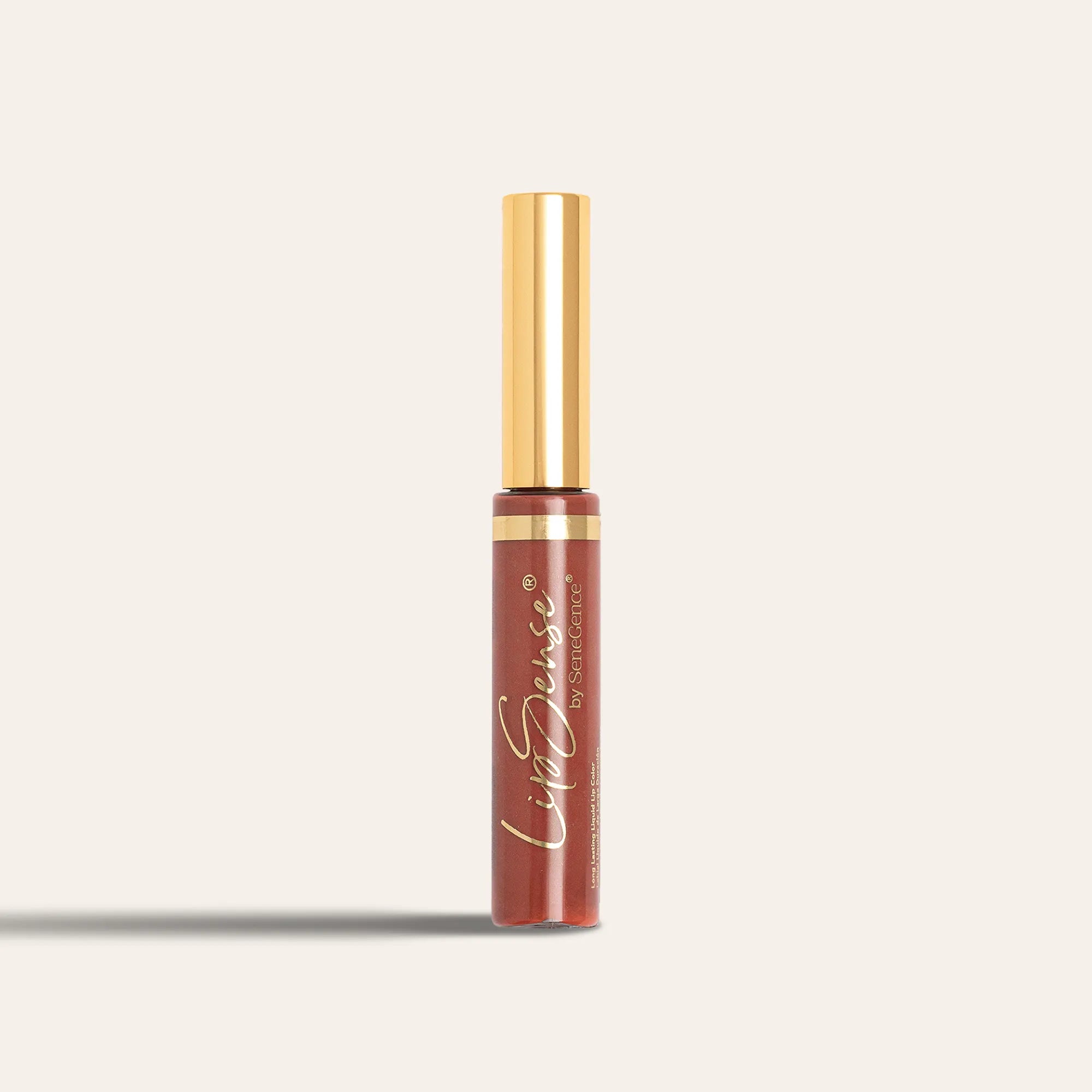
Give her a decision she can actually make.
Take LipSense Long-Lasting Liquid Lip Color in Persimmon. The payoff is color that is still there after lunch, so build the post around the lunch. Show the wear. Say the shade by name. Explain the thin color passes and compatible Moisturizing Gloss when the application is part of why the result matters. Ask the question that helps her choose: warmer or cooler than this one? For this exact example, use the LipSense Color route and current official Color page, with the compatible Moisturizing Gloss route and current official Gloss page.
A routine step, comparison shade, offer, or invitation belongs when it materially completes that decision. It should not crowd the promise merely because more inventory is available.
If she can finish the post and say what she would buy and why, it worked.
how to use it
Before you shoot, name the exact product, the client desire, the demonstration or proof, and the action the decision calls for. Add formula context, routine order, a useful companion, qualification, or disclosure when it is relevant. For skincare, let the exact product, visible payoff, supported reason, and customer's next decision shape the post rather than forcing the LipSense example into a template.
the science
If the payoff you are showing carries a number, keep that number attached to the exact product, endpoint, timing, and wording it was measured in. The center of a post can be a product, a comparison, or a complete system decision; measured results still stay with their tested subject. The Golden Rule of Claims has the source-safe sentences.
You're a distributor — say so before you sell
Say it in the same breath as the recommendation and it stops sounding like something you were made to add. It becomes part of why she believes you.
"I sell SeneGence, and this is the shade I would put you in." That plain sentence buys you the right to be taken seriously.
Say it early rather than underneath. Posts travel: screenshots, shares, search results, a friend forwarding a video with the profile cropped off. Whatever you wrote in your bio is not travelling with it.
The recommendation is still the point. Say who you are, then get back to helping her choose.
how to use it
Adapt by surface.
- TEXT OR IMAGE
- place it beside the recommendation
- STORY, REEL, OR TIKTOK
- use visible wording and the native commercial-content control when required
- VIDEO
- say the relationship in the video and repeat it in the description
- COMMUNITY
- distinguish a brand-run account from an individual distributor account, disclose the relationship that is actually true, and promote only where community rules allow it.
the science
Sharing, search and screenshots detach a recommendation from the profile that framed it, and a native platform control travels as machine-readable context where plain words may not. Both are worth having and neither replaces the other. Set the durable account identity in Your Professional Profile, then carry it into Customer Conversations.