Product Basics
Why Skincare Application Order Matters
Application order starts with directions and job: establish contact, place treatment, add moisture, then finish with compatible surface layers.
Layer Skincare in This Order: Prepare, Treat, Moisturize, Protect
Your serum may not be underperforming. One product may be over-dispensed, a layer may need more settling time, or two formulas may need a compatibility check.
Skincare follows the job each product has: cleanse, add Climate Control when used, apply the chosen treatment, moisturize, then use labeled sun protection as directed. MakeSense Silk Primer & Pore Minimizer and MakeSense Foundation follow as appropriate; with DayTime Moisturizer, those three complexion-prep layers form the Mechanical Shield.
That order gives every layer a clear place. Start from each product's current directed amount; time, rubbing, formula compatibility, and the condition of your skin can still change how smoothly the routine sits.
Prepare. Treat. Moisturize. Protect. Finish.
how to use it
Read the directions first, then run the morning sequence once: cleanse, Climate Control when used, chosen treatment, DayTime Moisturizer, labeled sun protection as directed, MakeSense Silk Primer & Pore Minimizer, then MakeSense Foundation as appropriate. Apply the directed amount, watch each layer settle, and press rather than drag anything that begins to roll. The Complete SeneGence Skincare Routine names the exact product for each slot. For the makeup layers, open MakeSense Silk Primer & Pore Minimizer and its current official page, then MakeSense Original Foundation and its current official page.
the science
Every layer changes the interface the next one meets: water activity, surface lipids, solvent evaporation, polymer load and any film already present. Directions lead. Vehicle, solubility, concentration, skin state, contact time, film formation and compatibility then shape how a routine spreads and settles. Transepidermal water loss (TEWL) is the diffusion of water vapor through the outer barrier, and it is what the moisture step is built to slow: humectants raise the water available at the surface, emollients fill the spaces between surface cells, occlusive materials reduce evaporation, and one cream often does all three. Molecular mass can matter to a single ingredient, but a multiphase finished cream does not receive one useful Dalton number. The reliable model is job-based.
Daltons measure molecular mass, not formula order
Sooner or later someone online will tell you to layer skincare by molecular weight, lightest first.
A Dalton measures the molecular mass of one molecule. It cannot rank the bottles on your shelf. A serum or a cream holds hundreds of them across several phases, so there is no single number to sort your shelf by.
Follow the directions and the job each product has. Climate Control goes first because it hydrates cleansed skin before anything richer follows; a Dalton number does not determine that decision. That is the part that changes the result you see in the mirror.
how to use it
When a client asks about size-based layering, explain the 500-Da idea as an ingredient-level heuristic for passive diffusion through intact outer skin, never a rule for finished products. Choose order from directions, contact, vehicle, skin condition and finish, then watch whether the layers spread, settle and stay compatible.
the science
The 500-Da heuristic comes from a 2000 paper proposing that passive absorption through intact stratum corneum falls off sharply above roughly 500 Daltons. It is a screening clue for one compound under defined conditions. It does not establish an absolute barrier or an ordering law for finished formulas. Partition coefficient, solubility, concentration gradient, vehicle, exposure and barrier state all affect diffusion as well. A serum or cream contains many molecules across several phases and cannot be assigned one scientifically useful molecular mass.
Climate Control begins with hydration
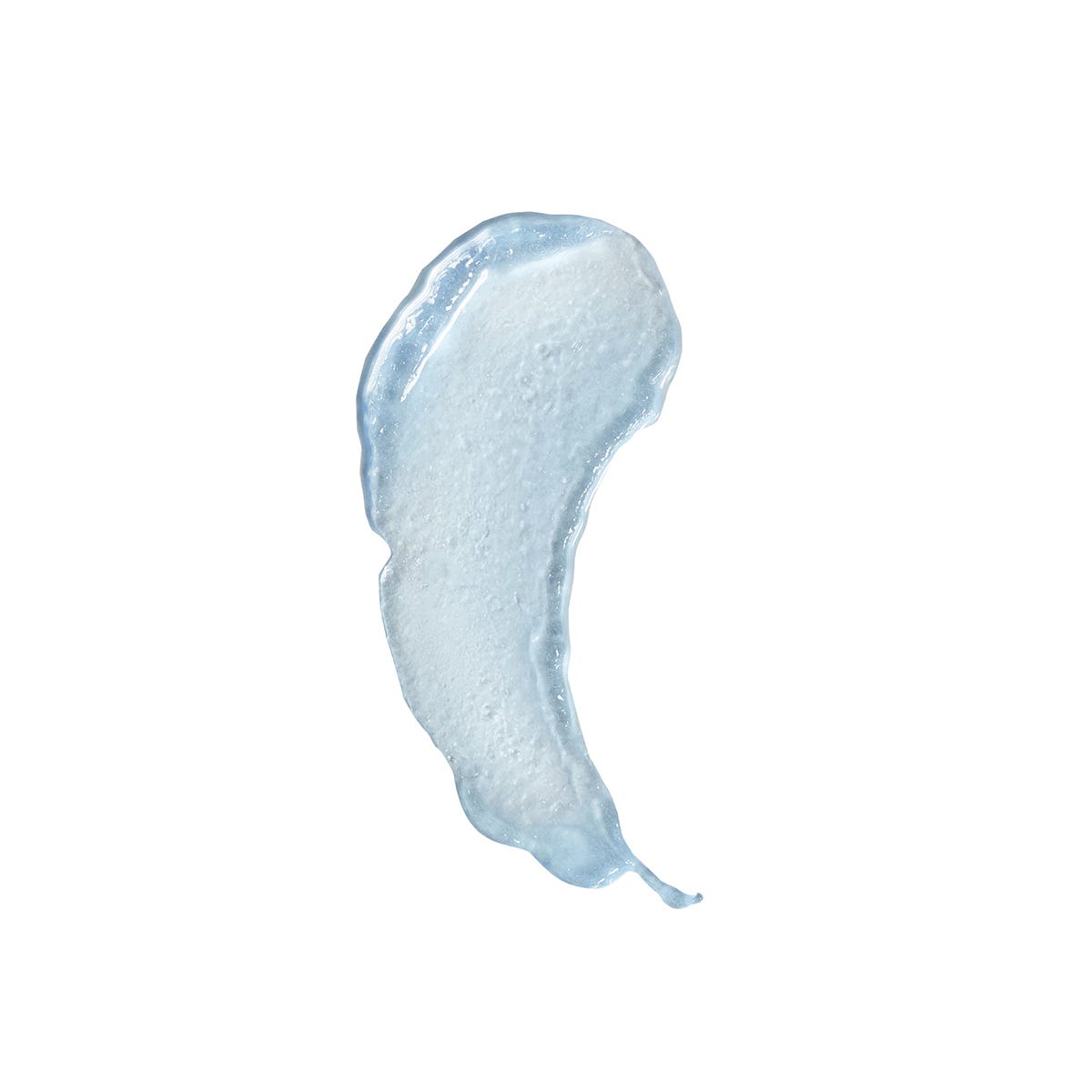
The first thing you put on cleansed skin decides how everything after it behaves.
Climate Control is what goes on next: a nickel-size amount or more as desired of preactivated hydrating gel essence, before treatment, before moisturizer, before anything richer. It is a water step rather than a cream step, and it is where the leave-on part of the routine begins.
Hydrate first, and everything after it lands on a surface that is already comfortable.
how to use it
Before the first use of Climate Control, prime the pump until product appears. Morning and evening after cleansing, dispense a nickel-size amount or more as desired into a clean palm or onto the back of the hand. Use clean fingertips as a palette, then massage it over face, neck, eye area, and décolletage in circular motions before treatment. If the next product pills, keep Climate Control in that directed amount and position while you compare settling, pressure, and pair compatibility.
the science
Xylitylglucoside, Anhydroxylitol, and Xylitol are the hydration actives here, with SenePlex+®, Glucosamine HCl, and Sodium Hyaluronate. Those three sugars are humectants: they hold water at the surface and improve slip, which is why the gel essence moves easily across the first leave-on step. Holding water is not the same thing as pushing a later treatment deeper. Its directions, its vehicle and its hydration job put Climate Control at the opening of the sequence. Delivery claims do not determine that order.
What goes wrong out of order
Little gray rolls under your fingers can come from over-dispensing, incomplete settling, rubbing, the condition of the skin, or the way two formulas meet.
Return each product to its directed amount or range, then give the application time to settle and press rather than rub. If it still rolls, try the two formulas on their own and read both sets of directions.
Pilling is a signal to compare the variables, not a verdict on one bottle.
how to use it
Troubleshoot on one facial section. Correct accidental over-dispensing back to the labeled amount or range, allow the application to settle, and press with minimal shear. If rolling continues, compare the formulas separately and check their directions. Polymer load, oils, salts, and overworking are better suspects than bottle rank. For dry, tight, or depleted-feeling skin, Nangai Oil is the next routine step after treatment and before moisturizer, adding lipid comfort when wanted.
the science
Pilling is an interfacial failure. Excess solids, incompatible polymer networks, a high salt or oil load, incomplete solvent evaporation and mechanical shear can each make a forming film bead and roll. The state of the skin surface changes wetting and spread as well. Assess amount, motion, settling time, directions and pairwise compatibility, in that order. Molecular mass is relevant only to the diffusion of a defined ingredient under controlled conditions; it cannot explain why two finished formulas roll up on contact.